From RFP to live engagement platform
From RFP to live engagement platform: the workflow for planning firms
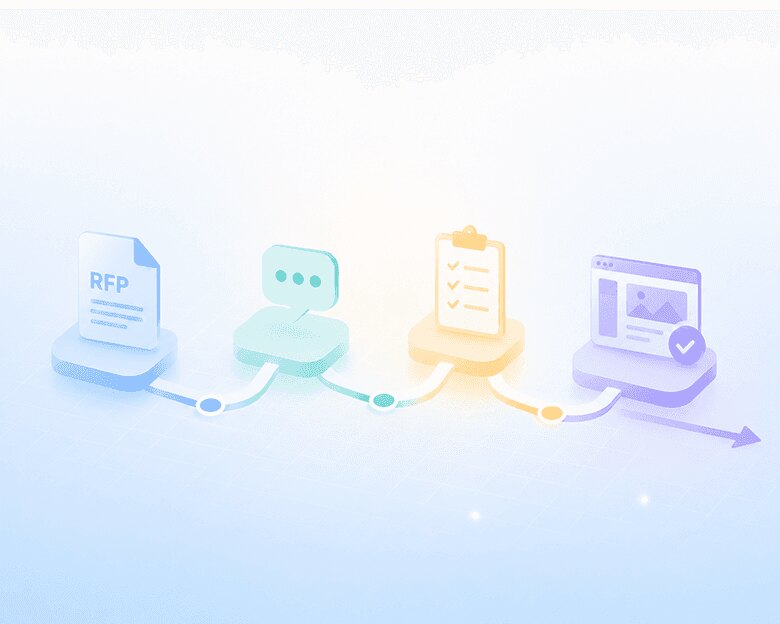
Most planning firms respond to RFPs with a methodology section that describes community engagement in words. A smaller number of firms now respond with a working engagement platform built specifically for the project, included with the submission and brought into the shortlist presentation. This guide is for firms in the first group considering moving to the second. It walks through what the workflow looks like and what changes when an RFP response carries a live demo instead of a methodology paragraph.
Why the RFP stage is where engagement tooling matters most
Engagement tooling lives downstream in most firms' minds. Something the team configures once the project is won, after the proposal lands and the kick-off meeting happens. That framing concedes the most important moment to competitors. The proposal stage is where a firm differentiates from three or four other firms responding to the same scope. Showing what engagement actually looks like beats describing it in words.
Brian Reetz, Principal at Design Collective, frames the bet directly:
"Including Senf in our proposals has become a real competitive advantage for Design Collective. It signals innovation to clients — and it wins projects."
RFP responses are scored on more than the engagement section, but engagement is the section where most submissions sound interchangeable. Promises of robust community engagement, inclusive participation, and meaningful public input read identically across firms. A live demo doesn't just describe the approach. It proves the firm can execute it. For evaluators sitting through a stack of proposals that all promise the same things, a clickable project-specific platform is the page they remember.
The argument compounds when the firm is invited to present. Shortlist presentations are won and lost on whether the team can show, not just tell. A platform the evaluators can interact with beats a deck describing what would happen if the firm were chosen.
The workflow, step by step
Five steps from RFP receipt to proposal submission. The whole workflow fits inside the proposal timeline a firm already runs.
Step 1 — Read the RFP for engagement requirements
The first move is pulling the engagement-specific requirements out of the RFP. Public participation expectations, documentation and audit standards, accessibility and multilingual requirements, deliverable formats, evaluation criteria. The language repeats across RFPs once a firm starts looking for it: public involvement plan, documented and traceable participation, inclusive and equitable engagement, demographically representative outreach, multi-modal stakeholder coordination.
Decode what each phrase typically means in evaluation. "Public involvement plan" is a NEPA-grade documentation expectation. "Documented and traceable participation" signals that the evaluator will be checking for audit trail capability. "Inclusive and equitable engagement" maps to multilingual outreach and demographic reach in the response.
The reader leaves this step with a structured read of what the engagement section needs to address and how each requirement should show up in the demo platform. Could go wrong: misreading the evaluation weight. Engagement may be 10% of the score or 30%. The effort that makes sense for the demo scales with that weighting.
Step 2 — Generate a project-specific engagement concept
With the requirements identified, the workflow shifts to building the platform itself. Upload the RFP to Senf. The AI reads the document and generates a project-specific engagement concept structured around what the RFP asked for: project name, branding, question types matched to the requirements, suggested modules. The output isn't a finished deliverable. It's a starting structure the engagement lead refines.
Time benchmark: minutes, not days. A reasonable platform draft exists before the proposal team has finished writing the methodology section. For a five-day proposal turnaround, the demo enters the workflow on day one, not day four.
Could go wrong: treating the generated structure as the final deliverable rather than a starting point. The proposal still requires the firm's expertise. The AI handles structure; the engagement lead handles substance.
Step 3 — Refine the engagement design for the specific project
The engagement lead reviews the generated structure and adjusts it for the project's actual shape. This is where the firm's expertise compounds with the platform's structure. Question phrasing tuned to how this particular community talks about the project. Map setups matched to the actual geography. Reference plans or design concepts embedded into the relevant questions. Outreach channels identified.
The Richmond BRT case study is a worked example. Design Collective took the platform structure and layered in embedded reference plans, image matrix questions for visual character, and rating questions tuned to transit-oriented development priorities. Six station areas configured in parallel, with data structured so cross-corridor comparisons were possible from the start. The refinement is the firm's value-add and the proof that the team has done the thinking, not just the configuration.
Could go wrong: over-engineering the demo. Proposal-stage demos don't need to be production-ready. They need to be specific enough to demonstrate the approach. Polish at this stage compounds into time the proposal team needs elsewhere.
Step 4 — Build a project info page and proof artefacts for the proposal
Beyond the survey itself, the platform supports a branded project info page. The firm's colors, the client's project name, FAQs, timeline, partner logos, accessibility-ready content. This page is the public-facing artefact that goes into the proposal submission.
Include a screenshot in the methodology section. Place a live link in the supporting materials. For the proposal evaluator, the artefact answers a question most submissions can't: what will this actually look like to my community? A linked, branded, project-specific page is a more honest answer than a paragraph describing the approach.
Could go wrong: branding mismatches. Use the firm's brand kit and the client's project name. Don't ship the demo with placeholder text from the template; treat it as part of the proposal's professional surface area.
Step 5 — Submit the proposal with the platform included — and bring it to the presentation
The proposal submission references the demo platform explicitly. The methodology section describes the engagement approach with the demo as the proof. Supporting materials include screenshots and the live link. The evaluator can click through and verify the firm has done the work.
The platform is also the asset the team brings to the shortlist presentation. Slide decks describing community engagement methodology look the same across firms. A live demo the team can navigate in front of the evaluators — walking through the project info page, showing a map-based question on the actual project geography, running a sample comment through the analysis layer — is something most competitors won't bring. The presentation slot is where the differentiation lands hardest, and the platform is the asset that earns it.
Time benchmark: the entire workflow from RFP upload to demo-ready platform fits inside the proposal timeline. For most RFPs, that's a few hours of work spread across the engagement lead and a project manager.
Could go wrong: the demo URL changes between proposal submission and presentation. Lock the URL early and treat it as part of the submission and presentation package.
What this workflow produces
The artefacts the workflow generates and how they feed downstream work.
A project-specific demo platform that's clickable, branded, and structured around the actual RFP. A screenshot pack for the proposal document. A methodology section that references real things instead of describing abstract ones. A presentation asset the team can navigate live in front of evaluators. Documentation the proposal evaluator can verify rather than trust.
Compare this against the alternative. The same workflow done without a platform-native tool requires assembling mock screenshots, drafting placeholder question text, and producing a methodology section that describes engagement instead of demonstrating it. Most firms either skip the demo entirely and lose the differentiation, or invest two or three days assembling a static mock-up and lose the time. The Senf workflow compresses both options into the hours that go into the methodology section anyway.
Design Collective's broader analysis pattern points to where the saved time accumulates. Their pre-Senf synthesis took one to two days per project, sometimes up to a week. The RFP-stage workflow runs on the same compression: hours instead of days, repeated across every proposal cycle.
And once you've won the work
The proposal-stage demo isn't disposable. Once the project starts, the platform built during the proposal becomes the live engagement platform. The structure built for the proposal is the foundation — refined further with client input, expanded with additional modules as engagement phases unfold, and run through to analysis and reporting.
The team that won the bid is the team that runs the engagement on the platform they already know, with the structure they already configured. No re-platforming, no learning curve, no "now we figure out what tool to use." The transition from proposal to project work happens inside the same product.
For Patchwork Digital firms reading this guide who already use Google Forms or SurveyMonkey, the implication is direct: the workflow consolidation starts at the RFP and continues through delivery, replacing the patchwork with one system. For Offline-First firms, the implication is that the demo isn't a marketing exercise. It's the first step of the actual project work.
When this workflow doesn't fit
Project types where it's overkill: small, single-phase engagement on a project where the firm has already won the work and the client doesn't expect a digital component. Solo practitioners or two-person firms whose RFP volume is too low to compound the investment. Markets where proposal evaluators are explicitly hostile to digital components and prefer paper-based or in-person-only engagement.
This is a tool for firms competing in proposal-heavy markets at meaningful scale. If the firm wins work primarily through relationships and direct selection rather than competitive RFPs, the proposal-stage workflow is less of a leverage point.
See Senf in action
• Walk through a project scenario relevant to you
• See setup, engagement, and analysis end to end
• Discuss pricing based on your project volume
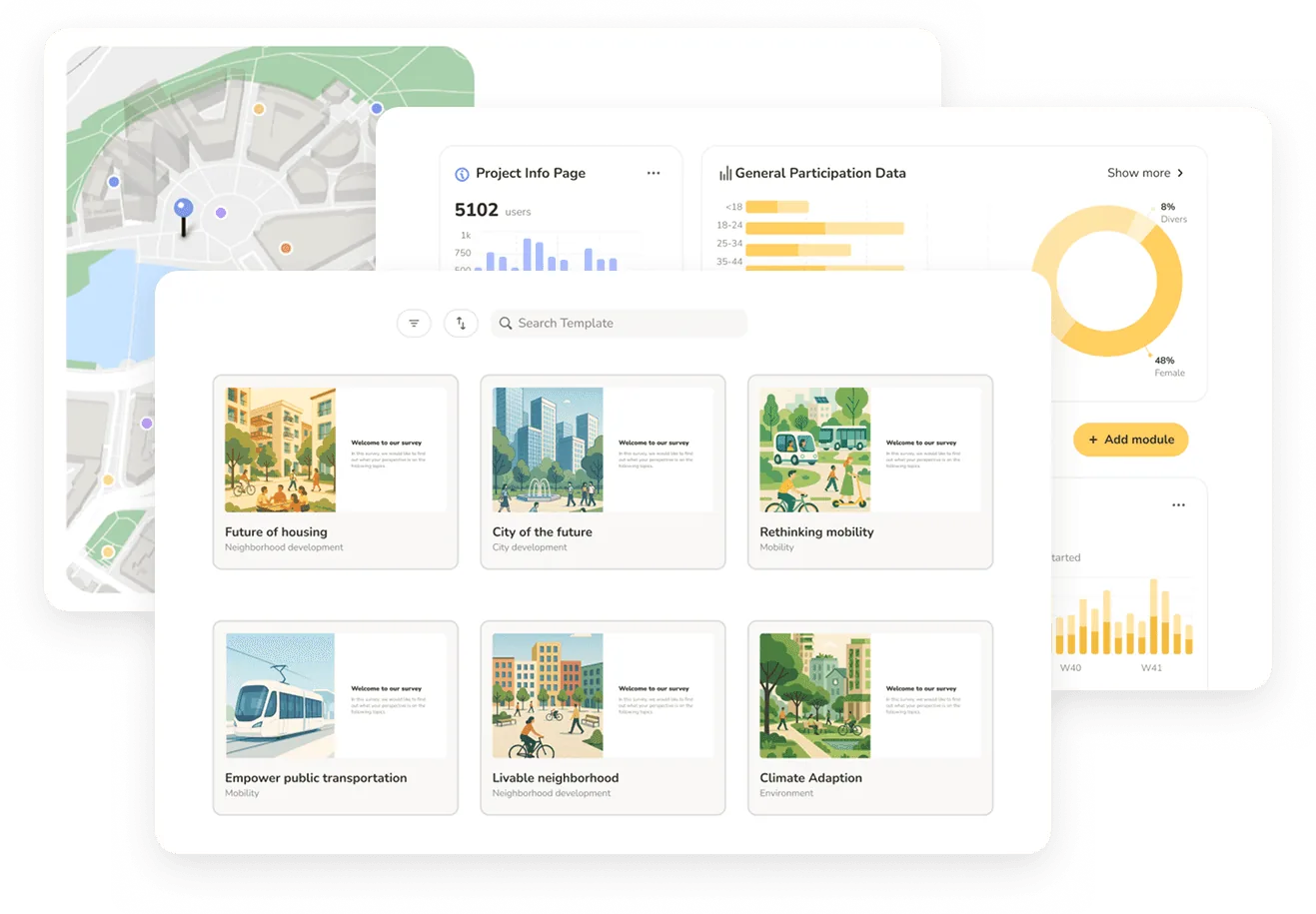
See Senf in action
• Walk through a project scenario relevant to you
• See setup, engagement, and analysis end to end
• Discuss pricing based on your project volume
See Senf in action
• Walk through a project scenario relevant to you
• See setup, engagement, and analysis end to end
• Discuss pricing based on your project volume